
Historical Keyboard Festival
January 10-13, 2027
Saint Paul, Minnesota
Presented by Schubert Club and Source Song Festival
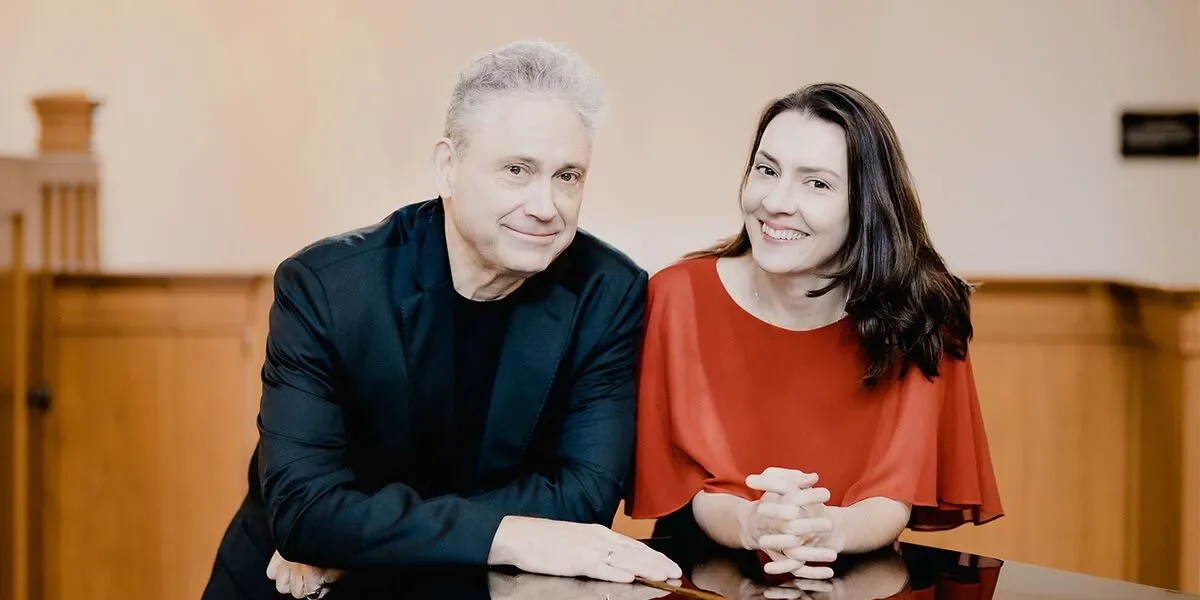
Pianists (solo and collaborative) and their duo partners (voice or strings) spend three immersive days in historical performance practice with several historical keyboards from the Schubert Club Museum collection. Participants will receive three hours of coaching on four historic instruments, and one public masterclass with Richard Egarr and Alexandra Nepomnyashchaya. Participants will also be featured in a noon-time performance on the final day and receive audio recording of the concert.
Faculty include Richard Egarr, Alexandra Nepomnyashchaya, Margo Garrett, Tim Lovelace
Open to applicants 18 years of age and older. We strongly encourage applying as a voice and piano duo, instrument and piano duo, or solo pianist. All participants need to arrive by 5PM on Sunday, January 10, and can leave at 2PM on Wednesday, January 13th. Participants are required to attend all festival events, and provide their own travel to and from the festival. Lodging and some meals will be included. Total tuition for the festival events, all inclusive, is $200 for a solo pianist, $300 for a collaborative duo.
Pianos
Fortepiano after Johann Schantz, ca. 1800
Built by Thomas and Barbara Wolf, Washington, DC, 1997
Johann Schantz (1762-1826) was one of the most respected Viennese fortepiano makers of his day. Joseph Haydn praised Schantz pianos, “on which everything is better expressed”, and Beethoven recommended them-The Schubert Club owns a letter in which he does just that. As with modern pianos, performers had their own personal preferences among early fortepianos with their differing characteristics. Schantz pianos were known for having a particularly beautiful treble and a lightness of touch. On this piano, the performer operates a knee lever to sustain notes. A moderator (which slips a piece of felt between the hammer and the strings for a softer tone) is operated by a small gilt knob over the nameplate. The original piano, which is in Boston, has a mahogany case and was once owned by Bing Crosby’s brother.
Fortepiano after Conrad Graf, 1824
Built by Rodney Regier, 1993
Active in Vienna 1822-1842, Conrad Graf is considered one of the major Viennese piano builders of the early 19th century. He was appointed Austrian court keyboard instrument maker in 1824. His instruments were enjoyed by leading pianists and royalty of the time – including Beethoven, Schubert, Schumann, Mendelssohn, Chopin, Liszt, and Brahms. In an economic context of increased demand for pianos, Graf was an early pioneer in mass production of pianos with a factory of around 40 employees by ca. 1826. When Graf retired, he sold the firm to Carl Stein – grandson of Johann Andreas Stein. This six and a half-octave instrument has a walnut case and four pedals, including a bassoon pedal.
J.B Streicher Piano 1869
This 1869 piano was built by Johann Baptist Streicher, the third-generation piano builder in the Stein-Streicher family. The Streicher firm was established by his mother, Nannette Stein Streicher—the daughter of one of Mozart’s favorite keyboard builders, Johann Andreas Stein. This piano is in the Viennese style with a wooden frame and minimal iron bracing. Streicher’s pianos were appreciated by several composers such as Johannes Brahams, for their smooth, clear tone and fast action.
Erard Grand Piano 1899
This straight-strung, 85-note piano, with its bookmatched pattern of rosewood veneer, is a fine example of French workmanship. Erard was the leading piano- making firm in France for most of the nineteenth century. The firm’s founder, Sebastien Erard, arrived in France from Strasbourg at the age of sixteen, later dropping the “h” from his last name to fit his new Parisian image. Gradually, the popularity of Erard pianos, (and those of the rival French firm, Pleyel), surpassed imported English pianos. Erard made significant design changes for the action of the piano. His “double-escapement” action, invented in the early 1800s and still used today, facilitated repeated notes and generally improved the responsiveness of the keys. Franz Liszt was a great admirer of Erard Pianos-in fact he was a spokesman for Erard. As a child prodigy touring Europe, he performed on pianos which the Erard company provided for him. Liszt in turn extolled the virtues of their instruments.