MNScholar Lecture: What Can String, Woodwind, and Brass Instruments Teach Singers About the Voice?
Singers in undergraduate music programs are generally trained to sing with piano. This makes sense: solo vocal literature is normally written for voice and piano. The piano is a very helpful instrument for singers because it is one of the few instruments that can offer full harmonic context for a piece of music. It also has a large range and various articulation possibilities, which can lead to a wide variety of sounds. However, like any instrument, it has its limitations. If vocalists perform only with the sound of the piano, singers may be consciously or unconsciously restricting their own possible tonal outcomes by what they hear (or, by what they do not hear). To teach singers to learn about their own voice and the art of collaboration, it would be wise to create spaces in collegiate music programs for singers to collaborate with instruments other than piano. What might singers learn about their own voices when they begin to sing with string, woodwind, or brass instruments?
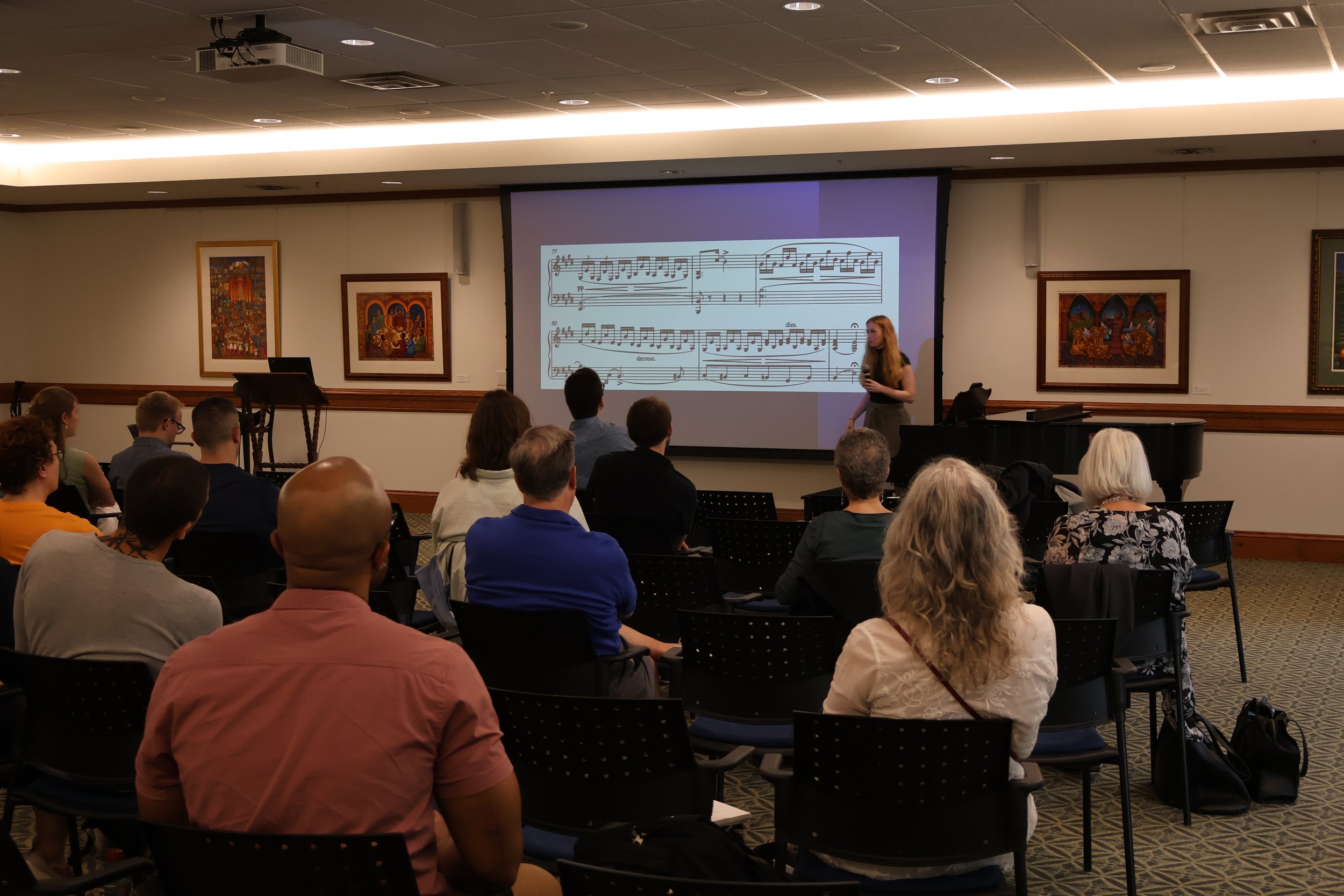
The presentation will begin with a discussion on the limitations of singing with piano,followed by three sections: singing with strings, singing with woodwinds, and singing with brass. Each section covers both the various types of onsets and the general timbral properties of the discussed instrument, and how they compare with the tendencies of the singing voice. It concludes with possible models regarding how undergraduate music programs may create structures to allow for singers and instrumentalists to collaborate in meaningful ways.
This presentation offers new and innovative tools for singers and voice teachers to explore the voice in a new light: by discovering how the voice is similar and different to string, woodwind, and brass instruments, singers can unlock even more expressive potential from and through their vocal instrument. It also offers exciting ideas for those who work in undergraduate music schools to foster a sense of community and collaboration between their vocal and instrumental programs, encouraging students to become autonomous artists and confident twenty-first century musicians.